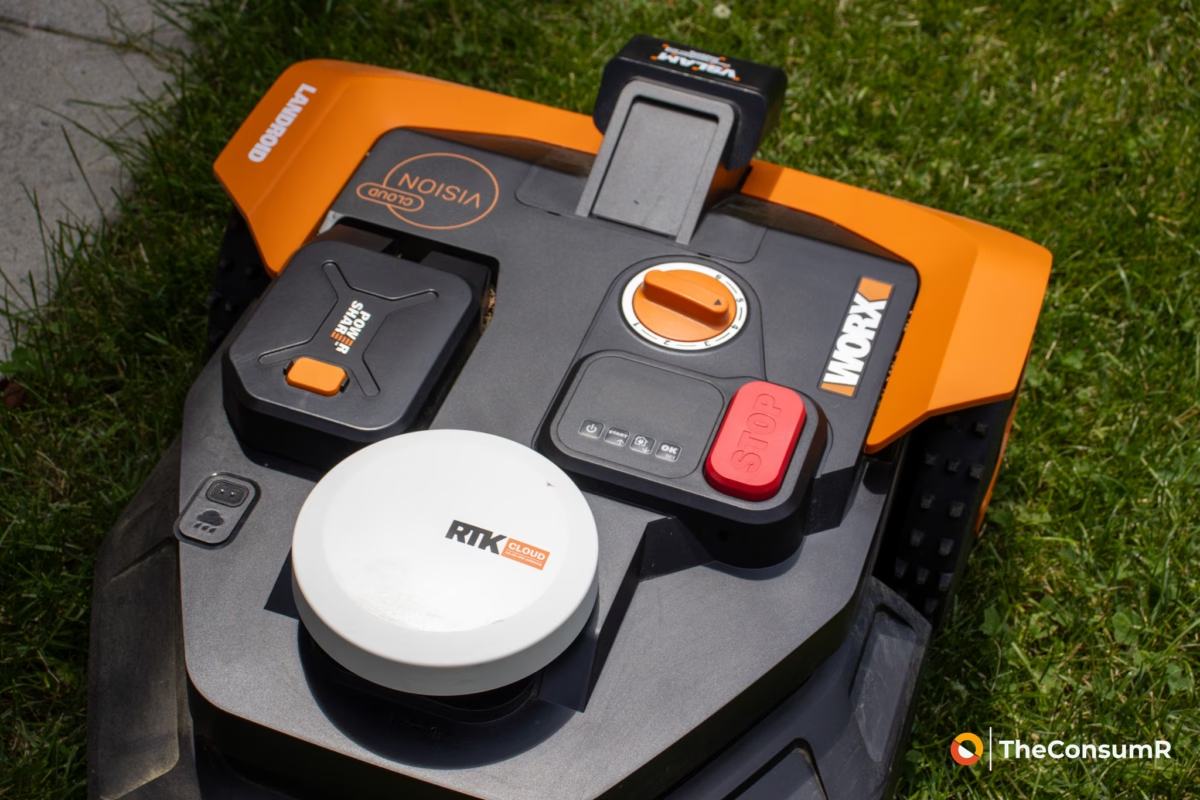


For most homeowners, there is usually one chore they would gladly excise from their weekends. While some dread unexpected home repairs, for many, it is the relentless weekly obligation of cutting the grass. It is a time-consuming, repetitive task that sits firmly at the top of my own list of avoidable chores. Enter the Worx Landroid Vision Cloud robotic mower, designed to transition routine yard work into a hands-free, 21st-century experience. Operating without the complex perimeter wires required by its predecessors, this 1/4-acre model promises to autonomously navigate the quirks of a standard suburban lawn. But does it truly offer a set-it-and-forget-it solution to lawn care, or does it require more babysitting than it’s worth?
Table of Contents
Setup and Mapping
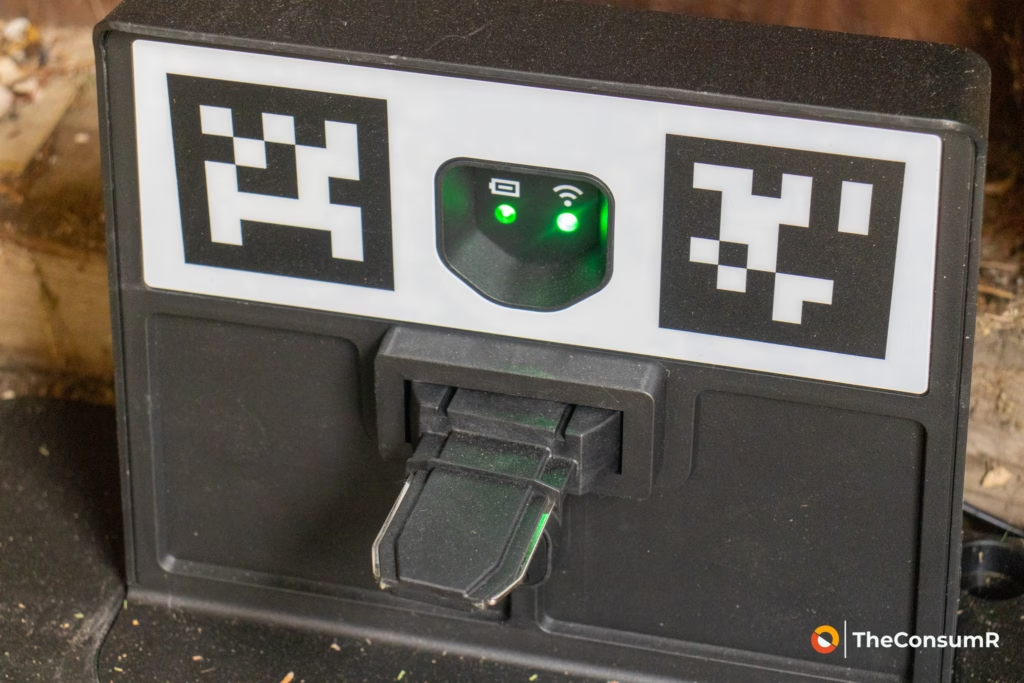
Out of the box, positioning and setting up the charging station can be a delicate balancing act with the Worx Landroid Vision Cloud robotic lawn mower. The base station demands a specific trifecta: access to a power outlet, a relatively central location on the property, and a reliable Wi-Fi signal. Depending on the layout of your lot, finding a spot that meets these technical requirements while remaining tucked away out of sight can be a challenge.
Fortunately, unlike competing systems that rely on proprietary wireless base stations or beacons, the Landroid Vision Cloud connects directly to standard 2.4 GHz Wi-Fi networks—a frequency standard in almost all modern homes. Ultimately, the goal for users will be finding a location that is easily accessible for the mower, yet inconspicuous to onlookers.
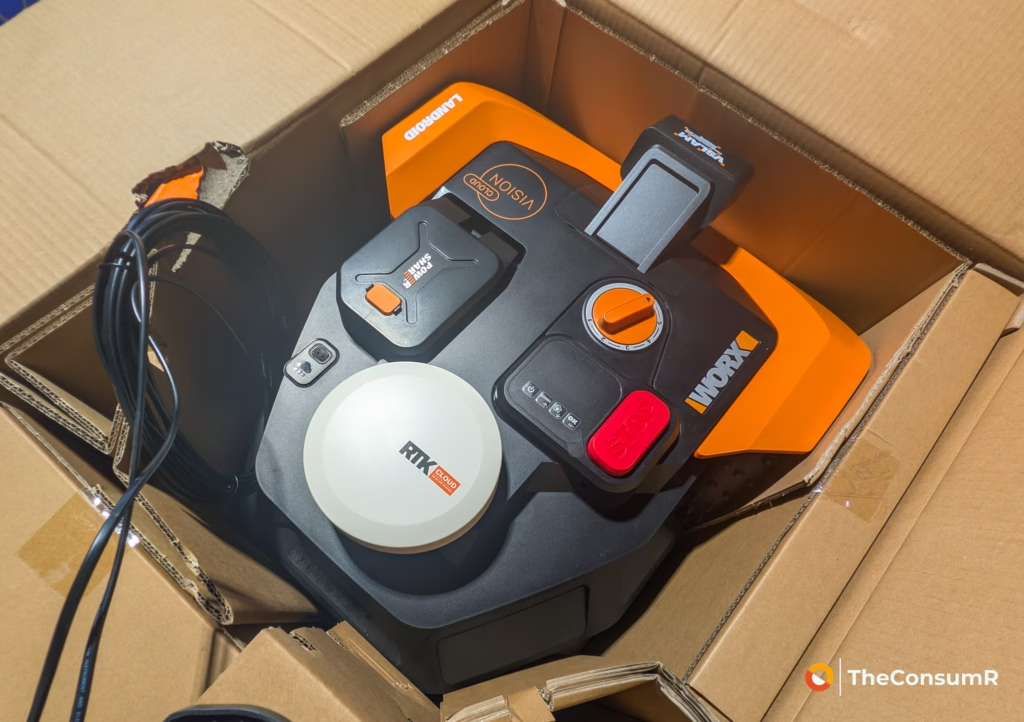
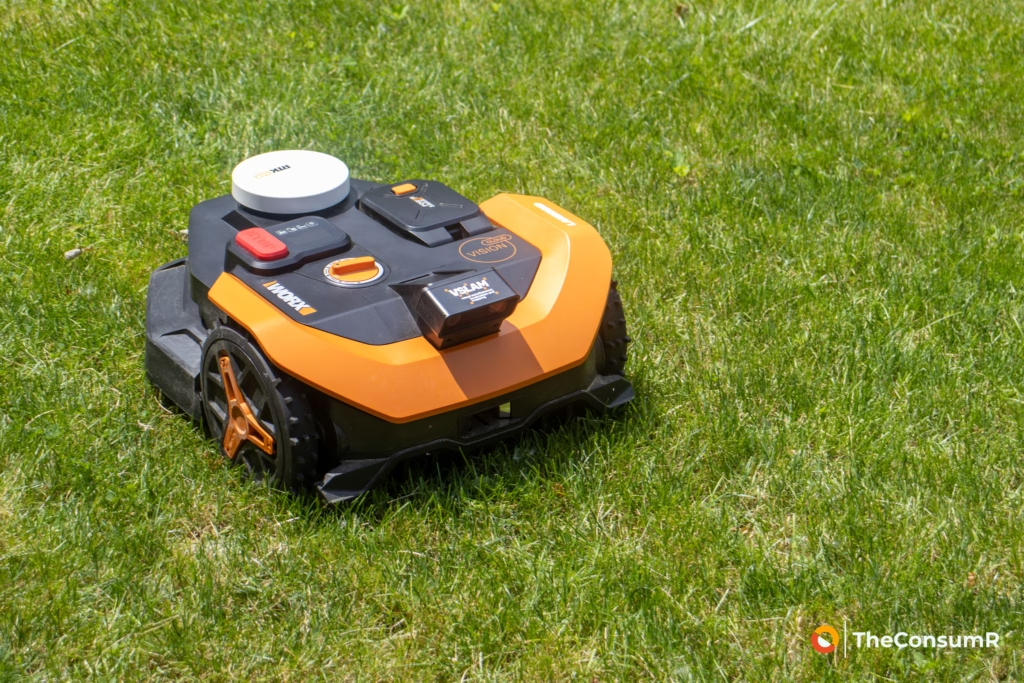
Once the base station was positioned, setting up the smartphone app took just a few minutes, clearing the way for the mapping process. For areas with minimal obstructions like trees or decking, the initial mapping was straightforward. However, even on more complex terrain, the mower managed the task reasonably well by leveraging a combination of onboard VSLAM (Visual Simultaneous Localization and Mapping) camera technology, satellite navigation, internal sensors, and the included physical barrier magnetic strips.
That said, the initial mapping was not entirely without friction. Minor errors did occur, but these discrepancies were quickly resolved—either through manual corrections via the app or by the mower itself as it gradually refined the digital map of the lawn.
Ultimately, the entire process of unboxing, positioning the base station, and finalizing the map took just over an hour to get right. When contrasted with rival automated mowers—many of which require hours of burying physical perimeter wires—the sheer simplicity of this setup represents a significant advantage that cannot be overstated.
Performance, charging and battery life
In operation, the Landroid Vision Cloud Robotic Lawn Mower is nearly silent, producing only a faint whirring as it clips the grass—a characteristic that consistently draws notice from onlookers. The mower navigates across the lawn and transitions between designated cutting zones with minimal fuss. Through the companion app, users can customize both the cutting height and the mowing patterns, which delivers a clean, uniform finish.
Predictably, an autonomous mower takes significantly longer to complete a yard than a homeowner using a traditional push mower. However, this slower pace is offset by the device’s intended use case: it is designed to live outdoors, operating continuously on a set schedule and adjusting its runtime dynamically based on weather conditions. Consequently, treating the unit as an occasional, on-demand tool rather than a fully automated system ultimately undermines its efficiency and defeats the purpose of its design.
In practical terms, a robotic mower’s battery capacity directly impacts its continuous runtime and the total duration of a job. While the Landroid generally manages its scheduled tasks autonomously, the overall mowing window is extended by at least 80 minutes whenever the unit must pause to recharge. While this type of mandatory downtime can be a dealbreaker on competing models with fixed internal cells, Worx offers a distinct advantage here by utilizing its standardized, removable PowerShare battery system. For homeowners with larger lawns—or those who simply want the cutting process completed faster—purchasing a secondary battery to swap in is a highly practical recommendation.
App Integration and Connectivity
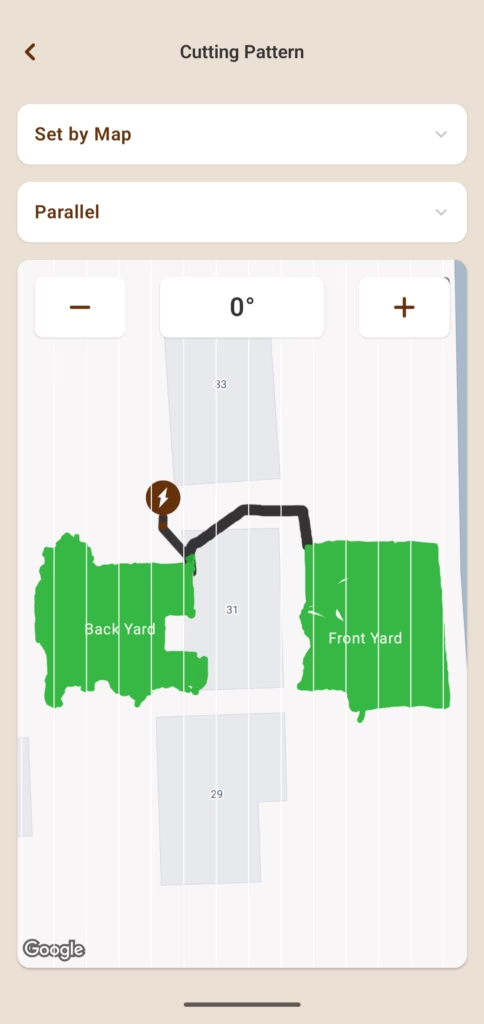
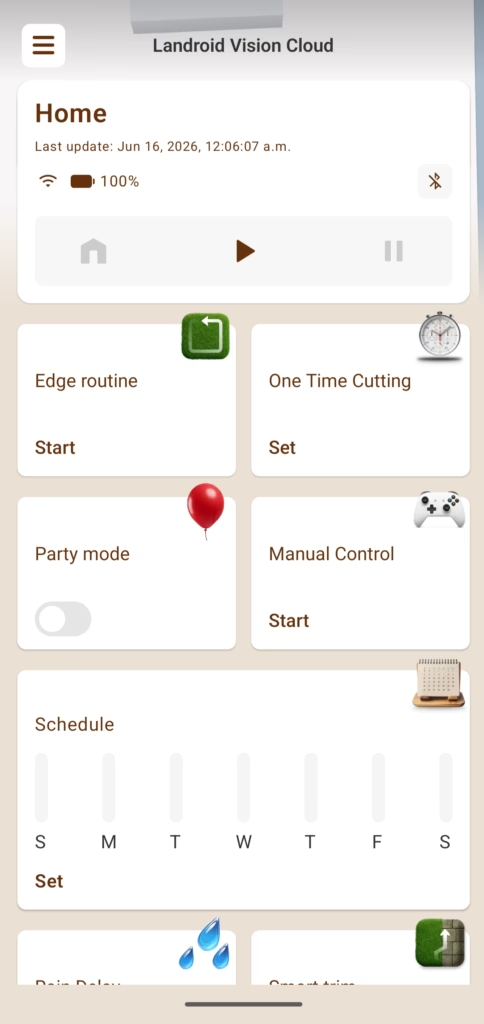
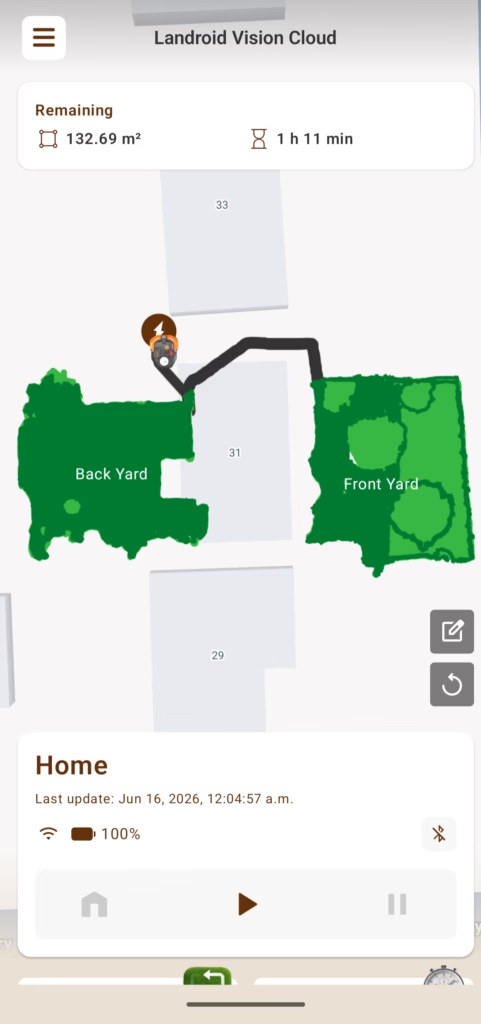
For the most part, the companion mobile app is well-designed, with the initial configuration taking only a few minutes. However, pairing the mower to your account can pose a challenge if your home Wi-Fi signal is weak near the setup area. Once successfully paired, the day-to-day interface is highly intuitive, making it simple to adjust schedules, modify cutting patterns, and manage manual controls.
The user experience only runs into friction when the mower encounters obscure faults:
- App Limitations: When error conditions occur, the app’s utility hits a wall; clearing notifications almost always requires physical intervention at the machine itself.
- Range Restrictions: While the system relies on standard Wi-Fi and Bluetooth for localized control, the absence of broader network connectivity is a notable omission. Integrating a cellular data option would have drastically reduced the connection dropouts that inevitably occur at the outer fringes of a property.
- Model Differences: While more premium models include proprietary “RadioLink” technology to extend coverage far beyond standard Wi-Fi boundaries, the WR310 variant tested here lacks this capability, leaving it entirely dependent on the reach of your home router.
The Cost Advantage: No Subscriptions
On a more positive note, the companion application stands out among competing smart-home platforms by adhering to a traditional, one-time purchase model that requires no ongoing subscriptions or costly feature upgrades. Worx heavily emphasizes this fee-free approach on both its packaging and digital marketing—a consumer-friendly strategy that provides a compelling selling point in a market increasingly saturated with recurring software paywalls.
Model Variations and Environmental Adaptability
Potential buyers should note that Worx offers several configurations of the Landroid Vision Cloud Robotic Lawn Mower tailored to different yard profiles. While the core technology remains uniform, the lineup scales based on battery capacity for larger acreage, and specific premium models feature four-wheel drive (4WD) to handle steeper sloped terrain. During testing on standard, relatively flat terrain, the base model encountered no traction issues, but a 4WD variant would certainly be a prerequisite for properties with dramatic ditches or severe inclines.
Beyond managing physical terrain, the mower adapts well to changing weather. An onboard rain sensor works in tandem with cloud-based climate data, allowing the system to automatically alter or postpone its cutting schedule during heavy downpours to protect both the turf and the machine.
Security and Theft Mitigation
From a digital standpoint, the security framework is highly effective:
- Account Tethering: During the initial setup, the mower is permanently locked to the owner’s specific mobile app account through a mandatory registration process. If the unit is removed from the property, it cannot be reregistered, reprogrammed, or used by a third party, effectively “bricking” the hardware and destroying its black-market resale value.
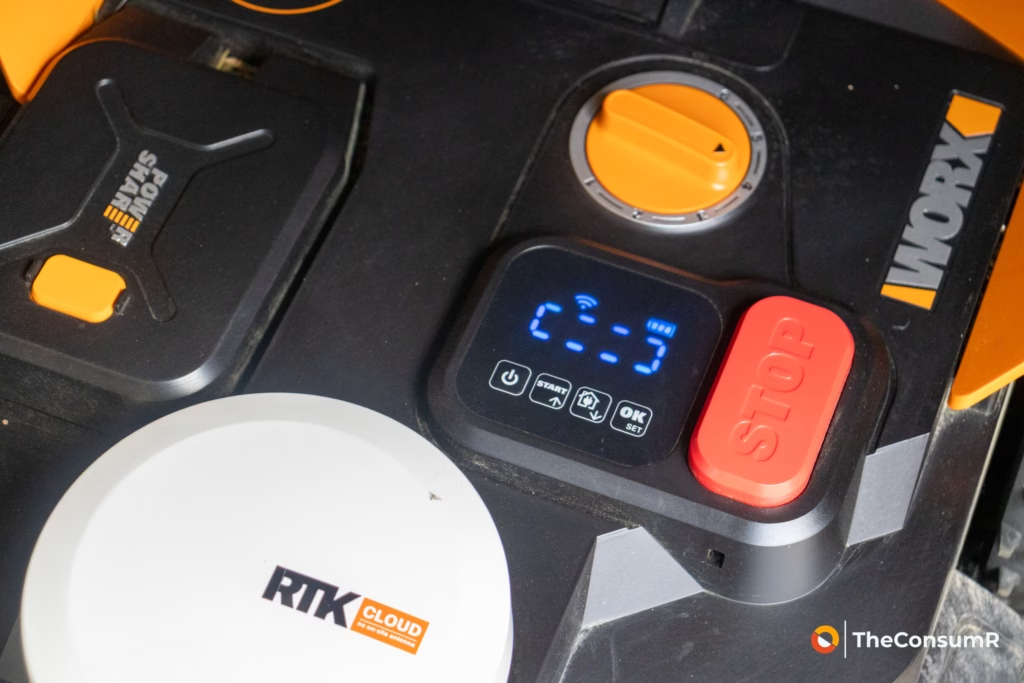
- Hardware Controls: On the chassis itself, a mandatory PIN code prevents unauthorized users from altering settings or manually starting the blades.
- Sensors and Geofencing: Internal gyroscopes trigger an immediate alert if the machine is lifted off the ground, and app-integrated boundary tracking notifies owners if the device leaves its designated perimeter.
However, this security suite leaves minor room for improvement on the physical side. While the digital lockouts ensure a stolen mower is useless to a thief, the onboard audible lift alarm lacks the piercing volume required to reliably alert neighbors or wake a household at night. Additionally, the device would benefit from clearer visual deterrents—such as prominent security decals or a flashing warning LED—to actively dissuade an opportunistic passerby before they ever attempt to pick up the machine.
Maintenance
For most consumers, the primary appeal of investing in a robotic lawn mower is the promise of a true “set-it-and-forget-it” workflow, and on this front, the Landroid Vision Cloud Robotic Lawn Mower excels by demanding exceptionally low ongoing maintenance. A major advantage over competing brands begins right with the retail packaging. While rival models from manufacturers like Husqvarna often require users to purchase separate blade replacement kits for routine upkeep, Worx includes a generous eight-pack of replacement blades directly in the box.
This out-of-the-box value proves particularly meaningful when paired with the system’s real-world durability. Over a month of rigorous testing—where the unit was deployed multiple times a day to maintain a tight schedule—the pre-installed blades showed no noticeable signs of dulling and required no immediate attention. This resilience suggests that the bundled spares will easily carry the average homeowner through a full cutting season or longer, reinforcing the Landroid’s position as a genuinely low-intervention appliance devoid of immediate hidden operational costs.
Our verdict
In our assessment, the Worx Landroid Vision Cloud Robotic Lawn Mower (WR310) emerges as a clear standout in the automated lawn care market, striking an exceptional balance between price, performance, and accessibility. Even when purchased at full retail price ($1,799 CAD), this model undercuts the cost of its main competitors while retaining a highly sophisticated feature set. Worx further bolsters this value by including a comprehensive three-year warranty, providing substantial long-term peace of mind for an appliance designed to live outdoors.
We have chosen the Worx Landroid Vision Cloud Robotic Lawn Mower (WR310) as our Editors’ Choice Award winner because its entire value proposition is firmly grounded in a consumer-first philosophy. By combining a remarkably straightforward setup and a complete lack of recurring subscription fees with robust cutting performance and long-term utility via user-replaceable blades and standardized batteries, Worx has delivered a high-value product that respects both the homeowner’s time and their wallet.